
Why Perform an Internal Inspection Before Sealing Your Pressure Vessel
Updated: Sep 7, 2025
It is good practice to perform an internal visual inspection before sealing your pressure vessel after internal work has been completed, especially after a catalyst or media exchange during a turnaround, shutdown, or outage.

On a project at a Biogas Upgrading Facility, operators loaded media into pressure vessels for the first time. The procedures from the process technology company specified a carbon media fill height above the Pressure Relief Valve (PRV) nozzle, which obstructed the flow to the PRV inlet. When a PRV discharges, it acts like a vacuum, drawing nearby objects into its chamber. These objects can become lodged in the sealing surface of the valve when it closes, preventing it from completely re-seating and creating a loss of containment.

The process technology company initially stated that this was acceptable when asked about the obstructed flow between the vessel and its pressure relief device. And the client bought in.
The fill procedures had to be followed by the user; otherwise, the technology company would void the guarantees on the new carbon towers.
Operators filled the two vessels with carbon media above the PRV nozzle and sealed the towers.
After educating everyone on the Boiler & Pressure Vessel code requirements outlined in UG-135, along with the consequences of a blocked PRV inlet or a PRV that is stuck open, the technology provider understood that it was in everyone's best interest to reduce the media fill height to a level below the PRV nozzle.
Operators had to climb back up the towers, unbolt the manways, and remove carbon media by hand. The solid media was found packed in the PRV nozzle, which would have affected their reliability. The operators looked like coal miners when they finished their work. I was happy that the facility would be a safer place to work.
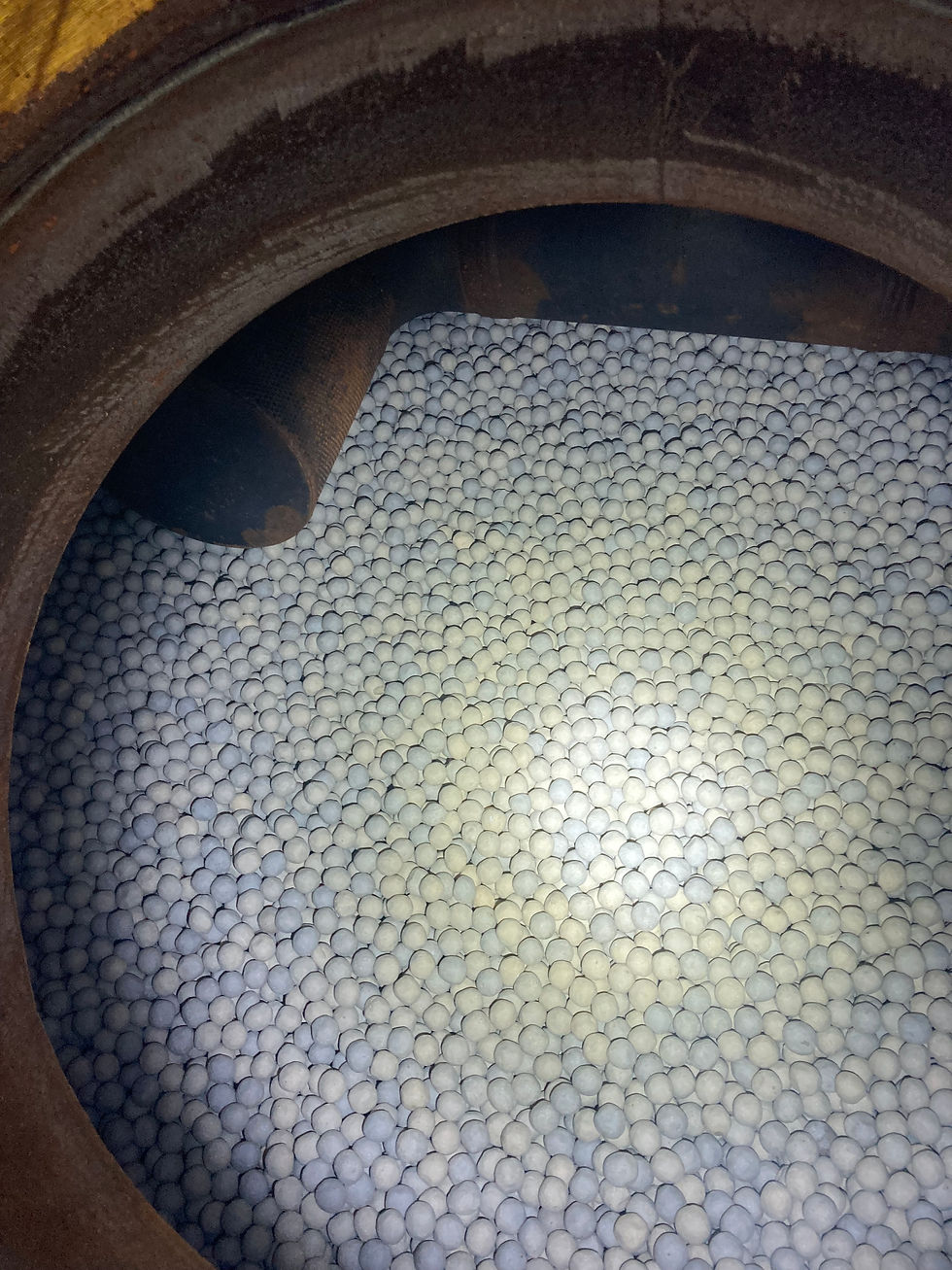
Pressure vessel designers must consider internal geometries when locating PRV connections. Internal variables, such as demister pads and liquid levels, must be accounted for to achieve the on-demand performance expected of critical safety instruments. When designing a media-filled vessel, ensure that the media is positioned below the PRV nozzle and at a sufficient distance to prevent it from being sucked into the pressure relief valve, thereby preventing the valve from fully closing.
Owner/ operators should designate a qualified owner's inspector to represent their interests and ensure code compliance and adherence to corporate policies.


